History
With a history dating back to the 1950s, North London Mountaineering Club has a rich heritage and a depth of experience among its members.
Foundation
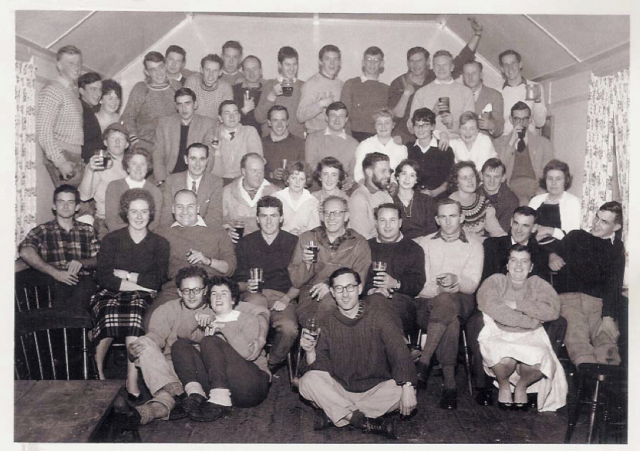
The club started in Glendale Grammar School, Southgate, where some pupils went on trekking holidays to the Lakes and Wales with the teachers. The main influence was PE teacher Trevor Panther, a keen climber. One boy, Tony Killingback, was already into climbing with his father, Harry, and they had already made a number of first ascents. The students decided to form a club to continue climbing and mountaineering after they left school. The inaugural General Meeting was held at Southgate County School on 4th July 1956.
Meetings quickly moved to the Fishmonger’s Arms, Wood Green. Some outdoor trips were organised, and it was decided to hold meets at New Year and Easter, via the club’s largest vehicle, a six-seater plus two in the boot, wooden Studebaker shooting brake. The October publicity meet brought in 10 new members including three young ladies.
The Club cottage and barn
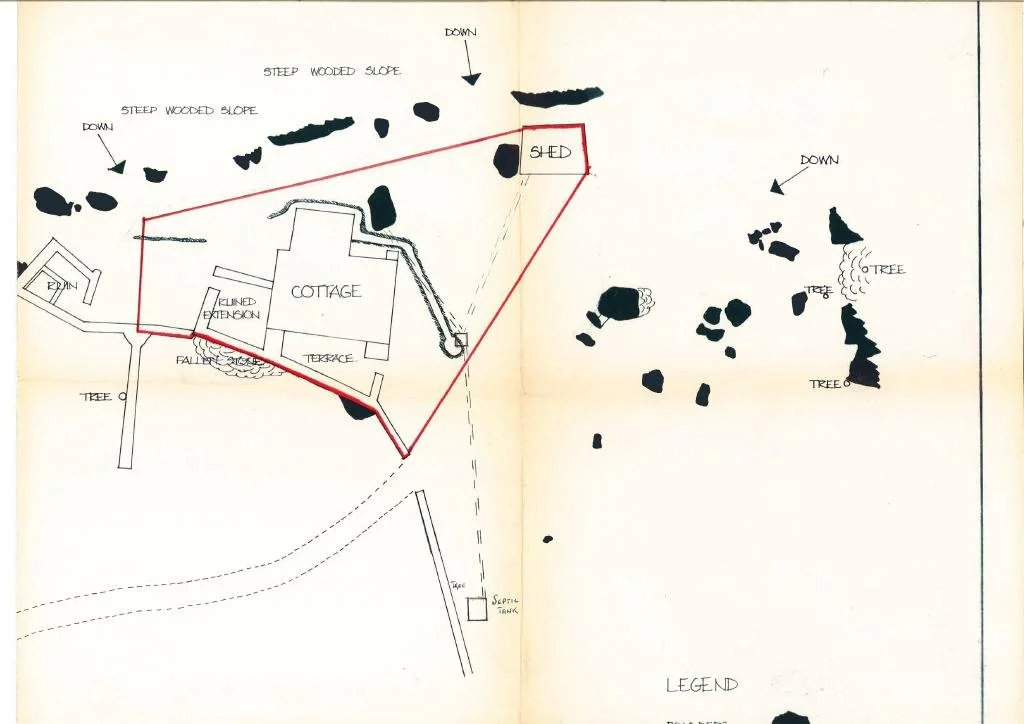
The club soon started looking for a property in North Wales. After a considerable search, in April 1962, the club found a property to rent just outside Capel Curig, comprising a cottage called ‘Bryn Brythenau’ and a barn. The cottage dated back to the 16th century, and had electricity and piped water. The barn was in a good structural condition but lacked doors and windows, and had no water or electricity – it was also knee deep in animal dung.
The freehold of the cottage and barn was conveyed to the Club's trustees from Mrs Sillit of Vancouver, British Columbia on the 7th March 1973. She would not sell the surrounding farm land. She rented it to a local farmer who sold it to the National Park shortly after the Park was formed. In 1973 the barn was pretty sound but the cottage was in a sorry state. When the Club members decided to purchase, it was accepted that the cottage would have to be demolished except possibly the gable end with the open fireplace and be replaced with a new building. Planning application was lodged and permission granted in March 1973 for a building considerably larger than the old cottage, with a useable floor area about three times greater.
The Club was only able to purchase and make a start to the new building work as a result of a grant from the Sports Council and a number of bequests from friends and members The demolition and rebuild started shortly afterwards with George Wilson taking u permanent residence having given up work. Although builders were employed to construct the shell and lay the slate roof, George acted as the clerk of works (very much hands on as he is today) to manage the work done by the multitude of members who turned up for the numerous working weekends in those early days.
Unfortunately the Club ran out of money, so that the cottage was never finished to the original vision and remains so today. In fact we ran up an overdraft at the bank who decided we were in effect bankrupt. This immediate problem was overcome by John Thei (Ruth's dad) persuading our present bankers the Westminster Bank to take on our account if the Club could find ten volunteers from the membership to guarantee the overdraft. Ten members were found who guaranteed £100 a piece. The Club survived and shortly afterwards Special General Meeting was called at which the membership overwhelmingly decided to levy the membership to the tune of £7.50 each. This paid off the debt and the cottage as it stands today was fitted out with begged and "borrowed" with second-hand and new wiring and plumbing, and a large amount of second-hand kitchen equipment. Thus the decline in the Club membership was reversed and we once more became viable.
Considerable work has gone into the cottage and barn over the years, and they are both now extremely welcoming buildings. The cottage is now reserved for the use of club members, whilst the barn is rented out to groups.
The cottage had a previous climbing connection – during the 19th century, the famous climbers Owen Glynn Jones and Ashley and George Abraham stayed there on climbing trips to Wales.
Climbing
Throughout the club’s history, many members have been involved in pioneering new climbs at home and abroad. Club members have established new rock and ice climbs across the UK, including such esoterica as routes on southern chalk (climbed with ice axes and crampons) and first ascents of many sea stacks. Many club members are still active in mounting expeditions. An entertaining account of a trip by club members to undertake the first ascent of the Golden Pillar of Spantik can be found here.